Maxwell School of Syracuse University
resources for teaching collaborative public mgmt, governance and problem solving...
our blog "Conflict and Collaboration "has posts by several experts on various related topics...

Collaborative Governance Faculty Affiliates 
 

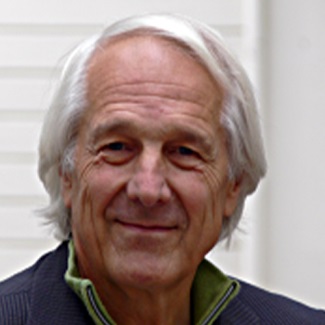
Terry Amsler is Program Director for the Collaborative Governance Initiative at the Institute For Local Government in Sacramento, California.  Situated in a broader program to enhance public confidence in government, the Collaborative Governance Initiative supports effective and inclusive public engagement in local decision making and helps local officials in cities and counties throughout California successfully navigate among the array of community engagement options that bring resident voice to the table on important issues.

As a colleague in the field of Collaborative Governance, Terry Amsler has provided insight and assistance for many projects, including The Collaborative Public Manager and The New Governance: Practices and Processes for Stakeholder Participation in the Work of Government.  Terry has served as a mediator, trainer and facilitator, as well as a developer of mediation programs in communities, schools, juvenile facilities, universities and other settings. He has taught university level classes on the structure, theory and ethics of dispute resolution, and is a founding board member of the National Association for Community Mediation (NAFCM).

Lisa Blomgren Bingham (SPEA, Indiana University) is the Keller-Runden Chair in Public Service at Indiana University’s School of Public and Environmental Affairs.  She has authored more than 60 articles and book chapters on here areas of interest: collaborative governance, comparative governance, dispute resolution, dispute system design, mediation, administrative law, and labor and employment law.  She has received both teaching and writing awards for her work in conflict resolution, including the Rubin Theory-to-Practice award from the International Association of Conflict Management and the Harvard Project on Negotiation.

Collaborative Research Areas: Interorganizational Collaboration; Groups and Individuals in Networks; Public Participation
 

Stuart Bretschneider is the Associate Dean and Chair of the Department of Public Administration at the Maxwell School.  He has published prolifically on diverse topics such as information management in public organizations; technology transfer and the diffusion of new technology; and administrative delay and red tape in public organizations.  Throughout his career, he has worked on aspects of integrating the use of technology into government: its effect on administration, collaboration, and public participation.  Dr. Bretschneider is currently working on a collaborative network experiment aimed to discover how and when information is diffused between and across organizations.

Collaborative Research Areas: Interorganizational Collaboration; Groups and Individuals in Networks

Kirk Emerson is Professor of Practice in Collaborative Governance at the School of Government and Public Policy and a Faculty Associate at the University of Arizona’s Udall Center for Studies in Public Policy.

Dr. Emerson has had a longstanding career in environmental conflict resolution and collaborative problem solving as a practitioner, trainer, researcher, and administrator. She is the former director of the U.S. Institute for Environmental Conflict Resolution of the Udall Foundation where she worked for ten years starting up and overseeing the federal government’s first independent environmental mediation program. Before pursuing her doctoral studies, Emerson worked professionally in urban planning for eight years at the Bucks County Planning Commission in Pennsylvania, first as an environmental planner and then as the director of countywide planning. She served as a community mediator in the Philadelphia area, where she gained her initial experience and training in mediating land use and environmental disputes.

Collaborative Research Area:  Ccollaborative Governance and Inter-Agency Cooperation (Climate Change, Border Security, and Public Lands Management) 

Catherine Gerard  is the Director of the Program for the Advancement of Research on Conflict and Collaboration (PARCC), Associate Director of Executive Education Programs, and Adjunct Professor of Public Administration at Syracuse University’s Maxwell School of Citizenship and Public Affairs.  As Director of PARCC she oversees an internationally known center for theory-building and practice in collaboration and conflict analysis and resolution.  Her research and practice focus is on the skills of collaborative leadership and change.  In 2007 she was the recipient of a Chancellor’s Citation for contributions to international and executive education at Syracuse. 

 is the Director of the Program for the Advancement of Research on Conflict and Collaboration (PARCC), Associate Director of Executive Education Programs, and Adjunct Professor of Public Administration at Syracuse University’s Maxwell School of Citizenship and Public Affairs.  As Director of PARCC she oversees an internationally known center for theory-building and practice in collaboration and conflict analysis and resolution.  Her research and practice focus is on the skills of collaborative leadership and change.  In 2007 she was the recipient of a Chancellor’s Citation for contributions to international and executive education at Syracuse. 

Collaborative Research Area: Groups and Individuals in Networks 
 
Neil Katz has distinguished himself as an innovator, leader, teacher, scholar and highly successful practitioner in academia and in organizational consulting over the past 38 years. Dr. Katz currently serves as Program Manager for Training and Organizational Development for the Executive Education Programs.  Neil’s academic career included service as founder and director of the Program in Nonviolent Conflict and Change, founder and director of the Annual Summer Institute on Creative Conflict Resolution, co-founder and faculty supervisor for the Campus Mediation Center and the Conflict Resolution Consulting Group, co founder and associate director of the Program on the Analysis and Resolution of Conflicts and associate professor of Social Science and Public Affairs.
 
Dr. Katz is the author of over 35 books, articles and book chapters on conflict resolution, interest-based negotiation, mediation, and nonviolent action, and is a board member of national organizations. He is a mediator, a process consultant, a facilitator, and a trainer/consultant in organizational leadership, conflict resolution and negotiation skills for business, government, education, and community groups.  Dr. Katz headed a consulting/training team from the Executive Education Programs of the Maxwell School that worked closely with the U.S. Social Security Administration and with the New York State Departments’ of Health, Labor and Education. During his career, Dr. Katz has received many accolades, among them, the Martin Luther King Jr. Human Rights Award from the Syracuse community for his career long commitment to nonviolent conflict resolution and the principles embodied in Dr. King’s life and work.
  

Soonhee Kim’s research and teaching interests include public management, human resources management, electronic government, local governance, and leadership development.  Her current research projects examine globalization and its impact on local government collaborative leadership and management capacity building strategies for enhancing transparency, citizen participation, and accountability, collaborative networks in local governments, e-government performance and leadership, and citizen trust in government in several countries in the Asian region.  

Collaborative Research Area: Groups and Individuals in Networks; Participatory Governance; Collaborative Leadership 

John Mathiason uses his extensive career experience at the United Nations to teach distance collaboration and in-person courses in International Public and NGO Management and Evaluation of International Programs and Projects.  As the Managing Director of Associates for International Management Services, an international consulting company, he has provided management training and advisory assistance to the International Atomic Energy Agency, the Provisional Technical Secretariat of the Comprehensive Test Ban Treaty Organization, the International Labour Organization and numerous UN agencies.  
 
Professor Mathiason's research interests are focused on means of improving the management of the international public sector. He has published on United Nations reform and on international governance of the Internet and is undertaking research on international management of climate change. He is a member of the Internet Governance Project and has prepared papers on Internet governance in preparation for the World Summit on an Information Society and on its follow-up. 

Collaborative Research Areas: Interorganizational Collaboration; Groups and Individuals in Networks

Ines Mergel’s research focuses on (online and offline) informal social networks among public managers.  In her research program, she studies the use of collaborative technologies, such as Wikis, Second Life, etc. and the need for interorganizational collaborative capacity building activities in the public sector. She is using both qualitative and quantitative social network analysis techniques. She maintains a blog covering the latest developments in networked governance. Her publications cover topics such as the diffusion and adoption of new media; Web 2.0 and social networking applications in government; and practical uses of networks throughout the public sphere. 

Collaborative Research Area: Informal social networks among government professionals 

Tina Nabatchi’s research interests include public management, public policy, and law, particularly in relation to citizen participation and deliberation, collaborative governance, and conflict resolution. Her research examines both theory and practice, and uses both quantitative and qualitative methods for evaluation.
 
Her current research examines effects of participation on the civic skills and dispositions of citizens, as well as how deliberative outcomes are integrated into public action and policy decisions.  Further research examines the use of alternative dispute resolution in the U.S. federal government, incentives for collaboration in networks, and the challenges and issues in the study and practice of public administration.
 
She is interested in the roles that citizens can and do play in the work of government. To that end, she is empirically evaluating the effects of participation on the civic skills and dispositions of citizens, and well as how deliberative outcomes are integrated into public action and policy decisions
 
Dr. Nabatchi is the co-director of CNYSpeaks, a project that engages the citizens of Central New York on important issues and works with them to create citizen-based agendas for the future.  After holding numerous public forums and engaging thousands of participants in face-to-face and on-line discussions, CNYSpeaks released “The Citizens’ Agenda for Downtown Syracuse” in Fall of 2009.

Collaborative Research Area: Public Participation

Rosemary O’Leary directs the Collaborative Governance Initiative, overseeing research, initiating E-PARCC, and conducting collaborative trainings.  Her areas of expertise include Public Management, Environmental Policy, Dispute Resolution, and Law.  She focuses specifically on interorganizational collaboration and conflict, as well as collaborative problem-solving.  Her current empirical research aims to discover how collaboration is used by high-level executives in the federal government as a management strategy.
 
Dr. O’Leary has won numerous teaching and national research awards for her work, which includes many publications on managing collaboration and conflict.  These range from practical skills required to “manage when you are not in charge,” to empirical studies of collaboration between senior employees of the federal government.  Her international work includes a Fulbright grant to study collaborative governance in the Philippines.  She has also consulted for many organizations including the Environmental Protection Agency; National Aeronautics and Space Administration; National Science Foundation; and International City/County Management Association. 

Collaborative Research Area: Interorganizational Collaboration and Conflict; Collaborative Problem-Solving; Teaching Collaboration

Susan Senecah is a professor of the State University of New York’s Environmental Science and Forestry school. Her research interests focus on the intersection of public participation and environmental policy.  In particular, she studies communication aspects of public participation in the formation of environmental public policy decisions, especially the origins, dynamics, persuasive strategies, and tactics of environmental campaigns.
 
In addition to these topics, Dr. Senecah publishes work in the areas of conflict and alternative dispute resolution, consensus building processes, legislative process, environmental public policy, and grassroots leadership.  She also teaches courses including “Collaborative Governance Processes for Environmental and Natural Resource Management.” 
  

David Van Slyke is a public and nonprofit management specialist.  His research areas focus on public and nonprofit management topics including government contracting, public-private partnerships, strategic management, government-business relations, and policy implementation. 
 
Professor Van Slyke works with several federal agencies, state and local governments, and nonprofits on government contracting and strategic management issues. He is a visiting faculty (nonresident) at the Maastricht Graduate School of Governance and teaches a winter policy implementation course in their MPP program. He is extensively involved in the Maxwell School’s executive education program and has worked and taught in India, China, Thailand, and throughout Europe.  

Collaborative Research Area: Interorganizational Collaboration


Program for the Advancement of Research on Conflict and Collaboration (PARCC)
400 Eggers Hall - Syracuse, NY 13244-1020
315.443.2367 / Fax: 315.443.3818