Promote health. Prevent disease. Build equity.
Master of Public Health
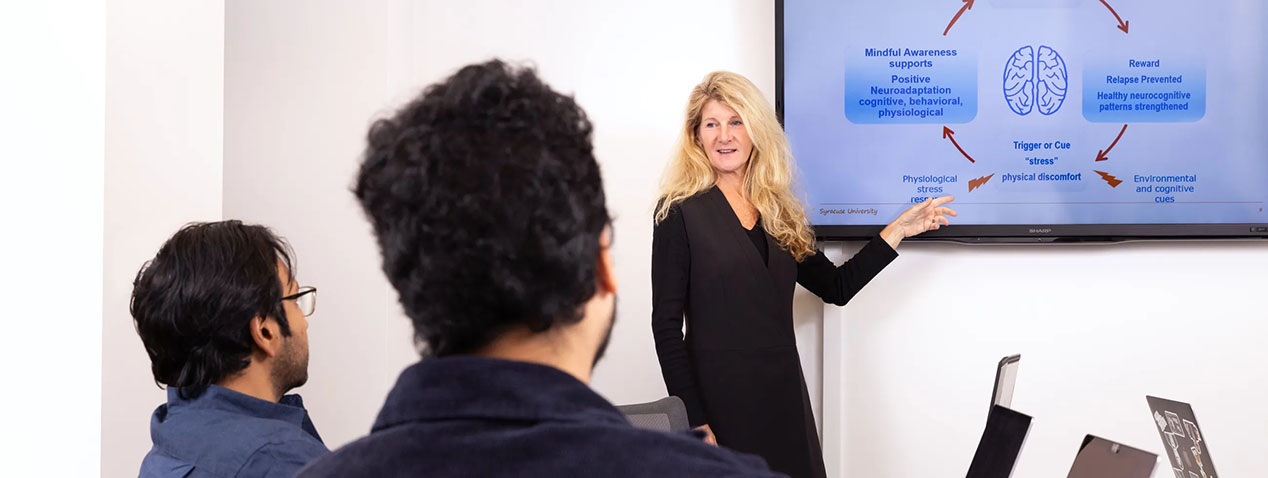
The master of public health (MPH) program at Syracuse University's Maxwell School prepares students to lead meaningful health initiatives across global and local communities.
With a focus on applied learning, global health and equity, the program provides a rigorous foundation for careers in public health practice, research and policy.

The MPH program is accredited by the Council on Education for Public Health (CEPH).
Overview
- On campus, Syracuse, N.Y.
- Two-year program for full-time students
- 42 credit hours
- Concentrations in epidemiology, global health and public health policy
- 150-hour Applied Practice Experience (APE)
- An Integrative Learning Experience (ILE) capstone
- Opportunities for fieldwork and partnerships
MPH Core Courses
- Analysis of Public Health Data
- Applied Epidemiology
- Health Equity and Social Determinants of Health
- Health Leadership and Management
- Introduction to Prevention Science
or
Development and Evaluation of Public Health Programs - Public Health Applied Practice Experience
- Public Health Policy
- Practicum
MPH Concentrations
Epidemiology Concentration
Students in this concentration learn to investigate the patterns and causes of disease across populations, building advanced skills in epidemiologic investigation and biostatistics to understand how chronic and infectious diseases develop and spread.
Coursework such as Applied Epidemiology II and GIS for Public Health, paired with electives in infectious disease control, chronic disease epidemiology and substance use, prepare students to translate data into evidence-based public health action.
Students take all of these courses.
- PHP 671 Applied Epidemiology II
- PHP 631 Intermediate Biostatistics
Students choose two of the following courses.
- PHP 618 Dynamics of Addiction
- PHP 704 Infectious Disease Epidemiology & Control
- PHP 708 Epidemiology & Prevention of Chronic Disease
Global Health Concentration
Students in this concentration learn to examine how policies, cultural norms and environmental factors shape health outcomes around the world and apply what they learn through hands-on projects and global partnerships.
Faculty bring deep international expertise, enriching the curriculum with case studies and collaborative research experiences that prepare students to lead in diverse and dynamic public health settings.
Students take all of these courses.
- Environmental Determinants of Global Health
- Global Health Governance
- Infectious Disease: Epidemiology and Control
Students choose one of the following courses.
- Global Health and Aging
- Global Perspectives in Alcohol and Other Drug Policies
- Indigenous Peoples, Colonization and Global Health
- Public Health Communication and Advocacy
- Substance Use and Mental Health: Global Contexts
Public Health Policy Concentration
Students in this concentration learn to analyze how healthcare and public health systems are financed, organized and reformed, and to communicate research findings that shape policy and practice.
Coursework in behavioral public policy, health communication and advocacy, and the changing U.S. healthcare system—paired with electives in health economics, the public policy process and program evaluation—prepares students to design, evaluate and advocate for policies that improve health outcomes and expand access to care.
Students take all of these courses.
- Behavioral Public Policy
- The Changing American Health Care System
- Public Health Communication and Advocacy
Students choose two of the following courses.
- Global Health and Aging
- Global Health Governance
- Health Economics and Policy
- Indigenous Peoples, Colonization and Global Health
- Managing and Leading Public Organizations
- Public Health Nutrition
- Public Policy and Program Evaluation
- Public Policy Process
Experiential Learning
MPH students at the Maxwell School build practical skills through structured, hands-on experiences designed to reinforce classroom learning and prepare them for professional practice.
Applied Practice Experience Pre-Planning
Prior to registering for PHP 667 Graduate Practicum in Public Health, MPH students must complete the planning steps (agency identification, competency mapping and products) required for this course.
Interprofessional Education
Students enrolled in the MPH degree program participate in an Interprofessional Practice (IPP) event. Students must successfully complete all required assessments and interactive experiences associated with this event.
See complete degree requirements.
Career Outcomes
Graduates pursue careers in:
- Global and community health organizations
- Public health departments and government agencies
- Nonprofit leadership and health policy advocacy
- Research and data analysis
The MPH also provides a strong foundation for further study in medicine, law or doctoral-level public health.
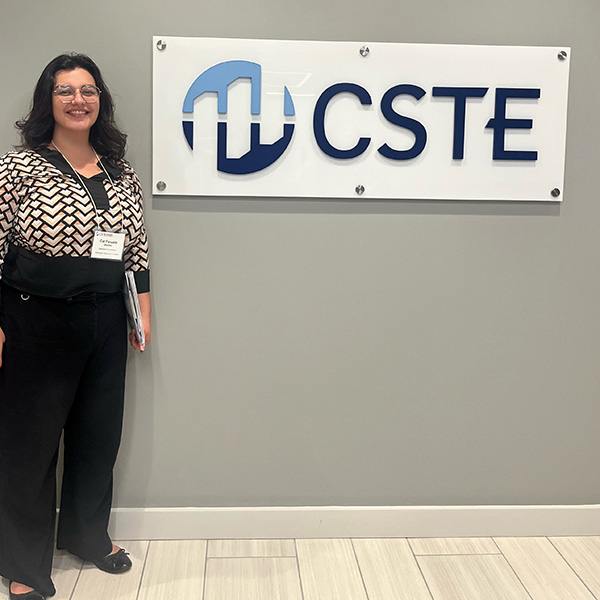

I am Maxwell.
I am incredibley grateful for the support my professors from Syracuse have provided me along the way, even after graduation. To this day, I maintain communication with them and seek their guidance.”
Catherine Faruolo ’23 MPH
Applied Epidemiology Fellow, Council of State and Territorial Epidemiologists