Media Coverage
By Diane Stirling
Syracuse University Today
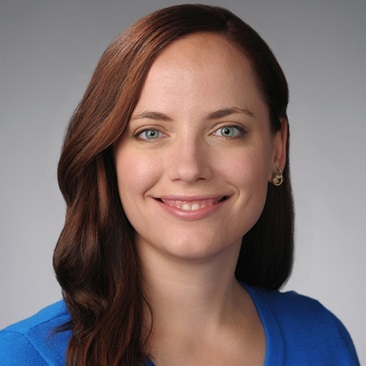
Dessa Bergen-Cico, professor of public health, is examining cultural variances in mindfulness practices and building a global research partnership in another hemisphere.
A professor of public health in the Maxwell School of Citizenship and Public Affairs is spending three weeks in São Paulo, Brazil, teaching classes and researching how mindfulness practices—such as guided meditation, breathing exercises and body scans to help people manage stress—can support mental health and community well-being in Brazil.
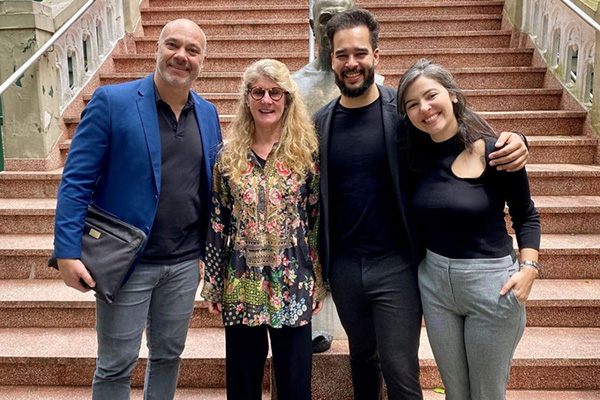
Bergen-Cico brings more than 15 years of experience using mindfulness-based interventions for mental health and addictions and has done specialized work with Indigenous communities in the U.S. and with the Syracuse VA Medical Center serving veterans with post-traumatic stress disorder. She also studies substance abuse, addictive behaviors, drug trafficking and the geopolitics of drugs and drug trafficking.
This is her third Fulbright award. She taught, trained and researched in the Republic of Georgia in 2015-16 and studied Thailand’s public health program in 2020 regarding its response to COVID-19.
She spoke with Syracuse University Today about her interest in Brazilian communities as an element of her research, what she hopes to learn there and the meaningfulness of a Fulbright award.
A: The work I’ve done here aligns with those of my faculty host on mindfulness-based interventions. My aim is to see how to adapt mindfulness programs tailored to Brazil’s diverse communities, including Indigenous and Afro-Brazilian ones that have contemplative traditions of their own.
This trip is meant to initiate reciprocal visits, student exchanges, joint publications and shared grant applications between Syracuse University and my host institution to build an international partnership that strengthens research for faculty and students.
A: We know we can detect changes in the body’s stress response because a lot of mindfulness work uses biomarkers to measure intervention effectiveness. Those markers look beyond the cultural limits of self-reported surveys, so you’re not focusing on things limited by cultural context or survey measurements. This work should help show a more equitable comparison of mindfulness work across different cultures, whether those programs work equitably, and if they don’t, how they need to change.
A: Since I work on non-clinical ways of addressing addiction, crime and violence, I want to see firsthand how my programs could be more culturally relevant. Working across a language barrier will strengthen my teaching since I’ll have to focus on unspoken observations of what people are experiencing and how they respond.
A: It’s a personal honor, but interest from the other side of the hemisphere speaks well about our research here with the Syracuse VA and with Native American communities across the country.
Public health is global, and many Maxwell faculty work internationally, so connections in other countries benefit faculty, students and the college. It also connects you to what’s happening outside our own institutional American bubble and is a form of soft diplomacy.