related majors, minors, graduate degrees and certificate programs
of Maxwell faculty conduct international research
topical research clusters provide vast academic and experiential opportunities
Undergraduate Studies
Our dynamic major and minor programs provide a solid foundation in the natural sciences, social sciences and humanities.
Environment, sustainability and policy integrated learning major (double major program), B.A. or B.S depending on base major
Graduate Studies
Graduate students are part of a vibrant intellectual community and work closely with faculty members in research and teaching. Advanced degree options include:
Geography, M.A.
Geography, Ph.D.
Joint degree program with the master of public administration (M.P.A.)
Certificate of Advanced Study in GIS and spatial analysis (concurrent with graduate studies)
There's a world of possibilities waiting for you.
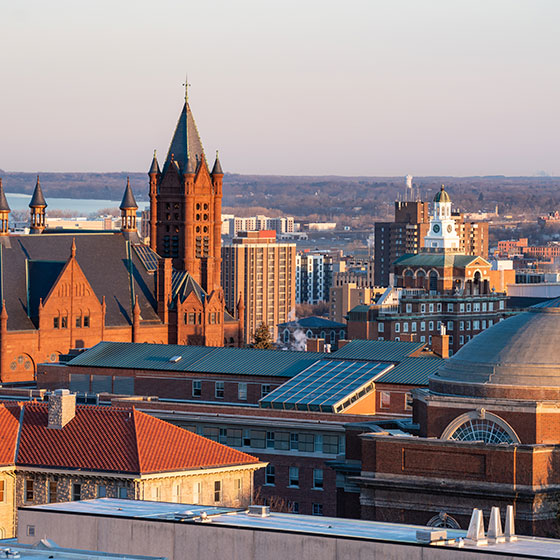
Syracuse, N.Y. - A Learning Laboratory
Syracuse University’s location in Central New York serves as a learning laboratory, where students gain real-world experience through research, internships and more.
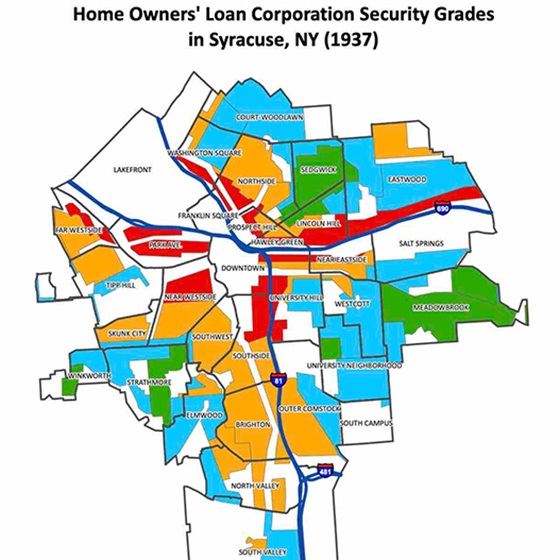
Students interested in environmental processes and management have easy access to the Finger Lakes and the region’s other extensive groundwater resources; ecological restoration projects in Onondaga Lake; environmental justice issues in Syracuse, N.Y.; or conservation challenges in the nearby Adirondack mountains.
Syracuse is also located within the first-in-the-nation unmanned vehicle traffic management corridor. This 50-mile stretch of land has become the most advanced drone testing corridor in the U.S., generating data that will inform future drone applications.
A Capital Experience
Applied and Scholarly Research
Faculty members within the Geography and the Environment Department represent wide-ranging interests and sub-specialties, providing students with the opportunity to address real-world problems through multiple lenses.
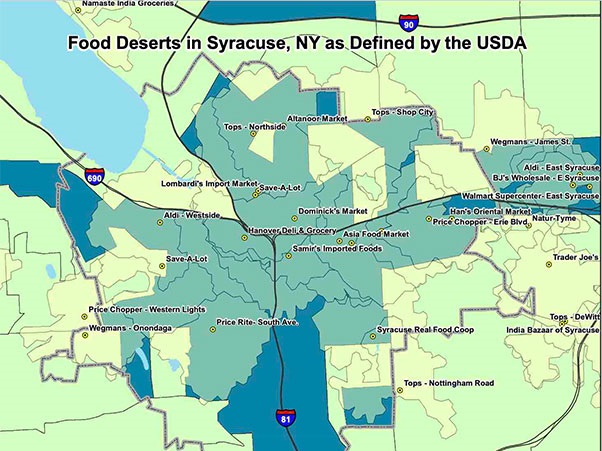
This unique partnership offers students with interests in urban studies, public health, environmental justice or community development opportunities to work on participatory research projects with local and regional community organizations.
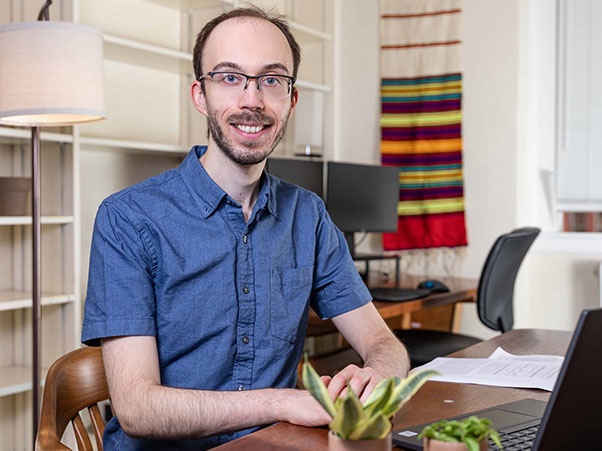
Professor Ethan Coffel is principal investigator on a three-year National Science Foundation (NSF) grant project exploring the link between climate and agricultural change. He is one of many faculty in our department whose research focuses on energy and natural resources.
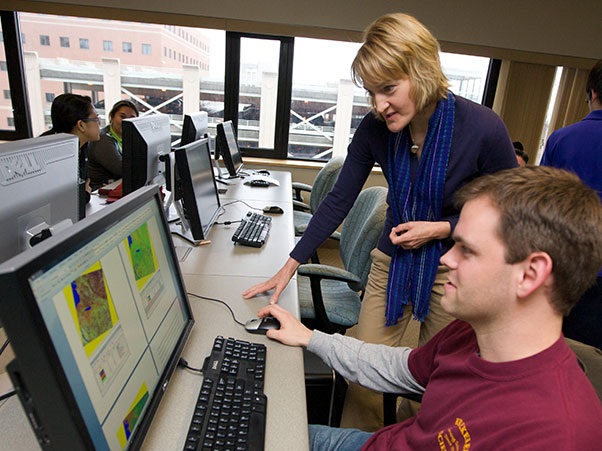
Watch this video interview with Professor Jane Read and learn about the tools and procedures for collecting, analyzing, visualizing, disseminating and understanding information about the earth, its inhabitants and physical processes using satellite imagery and other information technologies.
This research area links historical geography with the growing interdisciplinary field of the geohumanities, including historical GIS, digital humanities, spatial history and the environmental humanities.
Geography and the Environment in Action
Media Coverage

Feb 12, 2026
Media Coverage
Jan 28, 2026

Geography and the Environment Events
Planetary Fieldwork: Researching Global Processes in Real-Time
Virtual
Add to: Outlook, ICal, Google Calendar
Planetary Fieldwork: Researching Global Processes in Real-Time
In the social sciences, we are often drawn to the study of large-scale, border-crossing processes: climate change, capitalism, migration, transnational activism, supranational governance, supply chains, policy diffusion, and more. Yet, traditional methods of qualitative work can feel ill-equipped for this purpose. "Single case studies" allow for depth, but can foreclose connections with other scales or locales; multicase studies tend to involve structured comparison, which relies on questionable assumptions of unit homogeneity and independence. Is there an alternative? Here, I will present my own methodological journey from in-depth case studies to the multi-sited study of macro processes, drawing out the contrast between a case-based method and a site-based method. I offer a framework for selecting research sites in order to maximize analytic leverage on fast-moving, global-scale phenomena such as supply chains, the energy transition, and anti-extractive movements. After this presentation, we will have a Q&A and open discussion in which participants are encouraged to share their own fieldwork approaches and challenges.
Category
Social Science and Public Policy
Type
Workshops
Region
Virtual
Open to
Alumni
Cost
None
Organizer
Geography and the Environment Department
Accessibility
Contact Cristina Bellino to request accommodations