After the Maui Fire: Student Researches Native Hawaiian Political Action
By Diane Sterling
March 26, 2026
Syracuse University Today
Sophia Hiatt's research examined how Lāhainā Strong mobilized to fight for Indigenous land rights after the 2023 Maui wildfires, seeing the area firsthand with support from SOURCE.
On Aug. 8, 2023, the town of Lāhainā, in West Maui, Hawaii, was consumed by one of the deadliest wildfires in U.S. history. The result: more than 2,000 acres burned, 12,000 residents displaced and 102 people killed. Despite the devastation and ongoing community grief, Hawaii’s governor reopened West Maui to tourists just two months later.
That decision sparked significant controversy and spurred thousands of residents and Native Hawaiians to political action. They wanted fire victims to have more time to grieve their loved ones, secure new housing and heal as a community.
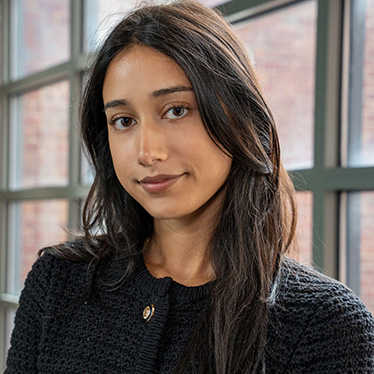
For Sophia Hiatt, a senior in the Maxwell School of Citizenship and Public Affairs, the disaster was the catalyst for a year of scholarly inquiry and the subject of her political science distinction thesis. As a multiracial person of Native Hawaiian heritage, Hiatt has long been interested in Hawaiian politics and perspectives—an interest solidified through a Tufts University summer high school program to develop leadership skills for social change. She focused on the Native Hawaiian community and Protect Mauna Kea, she says.
“This [thesis] project was far more than simply another academic requirement. It was a meaningful and introspective experience that allowed me to reconnect with the history, culture and people who mean so much to me. Local and Native voices are too often absent from public discourse, and I felt a responsibility to ensure that the voices of community members are recognized and credited for their work,” Hiatt says.
Her research included analyzing the grassroots organization Lāhainā Strong’s Instagram posts, critically comparing its strategies to two other Hawaiian land-based movements, determining how it amassed 21,000 followers and assessing how it conducted voter education and registration drives. She examined how the group helped pass land-use regulation bills that opened housing for displaced fire victims, aiding community members to maintain island residency. She also interviewed group founder Jordan Ruidas.
SOURCE Support
Supported by the Syracuse Office of Undergraduate Research and Creative Engagement (SOURCE), Hiatt took her research further. She traveled to Maui to gauge the destruction and witness the organization’s impact firsthand, and attended the Lāhainā Strong Christmas Mākeke, a community holiday market held at the site of a Buddhist temple destroyed by the fires.
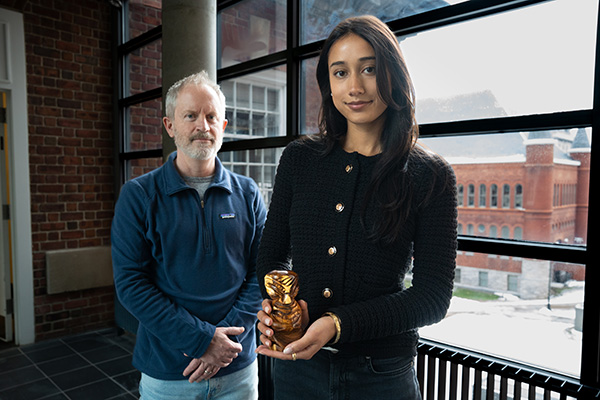
The opportunity to conduct on-the-ground inquiry in Maui and to see the impact of the fires was transformative, Hiatt says. “Being present at the market—the actual site of so much loss and resilience—gave the research a depth and texture that no amount of reading could provide.”
Mentors and Guides
Hiatt says she approached the project “with deep humility, mindful of the lives lost and the real people who are not only living with the consequences of this disaster but are also using this moment to reshape the political and social dynamics of their community.”
She credits thesis advisor Ryan Griffiths, professor of political science; Jessie Trudeau, assistant professor of political science; and Erin Hern, who leads the school’s Political Science Distinction Thesis Seminar with helping her hone analytical and critical thinking skills, build confidence in academic spaces and develop stronger scholarly writing practices. “Their mentorship has been invaluable,” Hiatt says. “It has pushed me to approach complex questions with more rigor and more care.”
Hiatt would like to see her research published in an undergraduate research journal in hopes of inspiring other students to learn of Lāhainā’s post-fire political landscape and perhaps continue the research.
She also believes the lessons she’s learned this past year will carry forward into her career. After Commencement, she plans to work full time in compliance at Fidelity Investments before applying to law school in the future. “My commitment to institutional accountability and transparency ultimately connects both my thesis research and my future professional goals,” she says.
Related News
School News
Oct 5, 2026
School News
Sep 24, 2026
School News

Sep 16, 2026