Maxwell School News, Research and Media Coverage
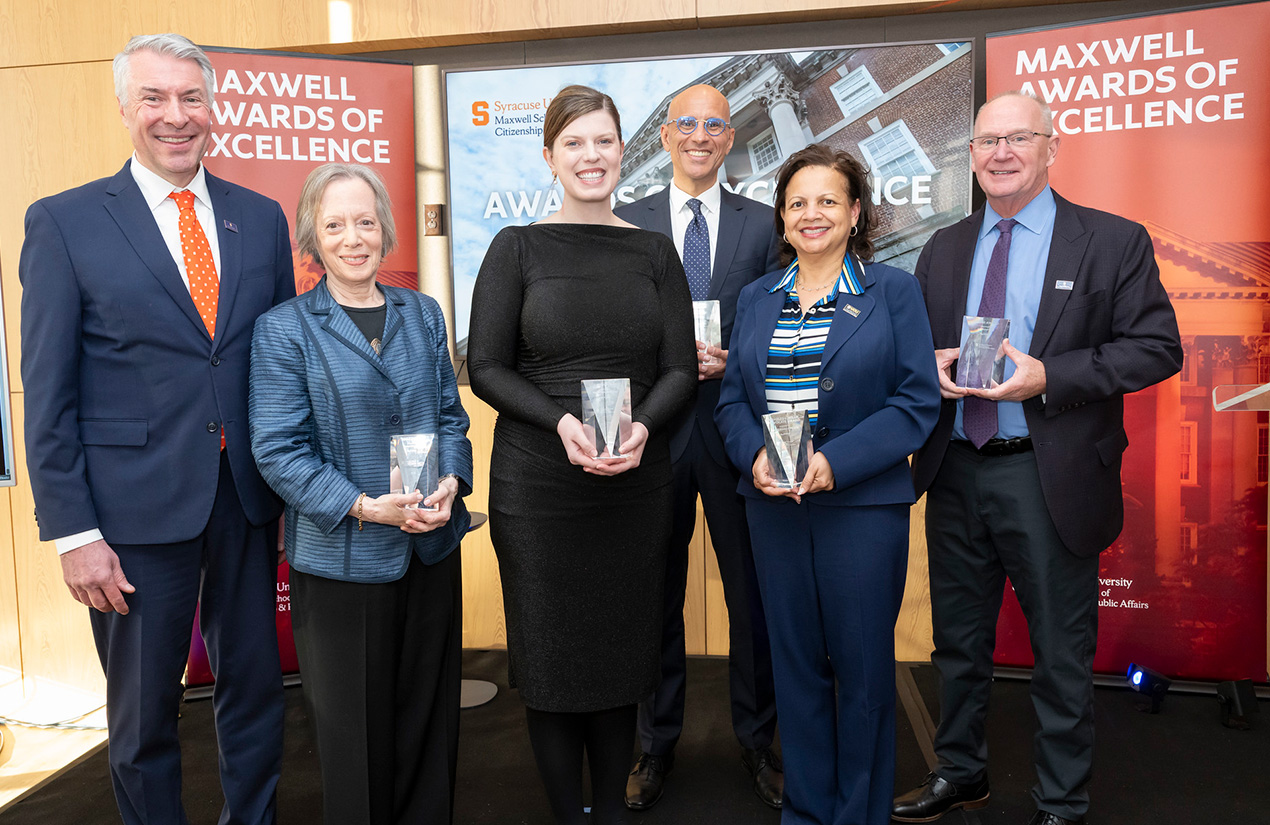
Alumni Honored at Awards of Excellence
The fifth annual event in Washington, D.C., celebrated five Maxwell graduates whose careers reflect the school’s commitment to the public good.
Monarch Quoted in WGRZ Article on the Economic Impact of the Conflict in the Middle East
March 3, 2026
WGRZ
Related:
Trade, Development, and Political Economy Working Group

The Middle East conflict is creating economic ripple effects, particularly in oil markets, with national gas prices already rising roughly 15 cents and potentially climbing an additional 15 to 30 cents over the next week or two. Analysts note that because oil factors into fuel, transportation and production broadly, the price increases could contribute to wider inflationary pressure.
“It's true that there's a direct feedback into the gasoline prices that people face at the pump. But it's such an important commodity for all of the other production that goes on in our economy,” says Ryan Monarch, associate professor of economics.
“We're already in a period where inflation is running high. Inflation is not absurdly high—it's not like it was during the pandemic or during the oil crisis of the 1970s. But there's a reason why we go back to the 1970s and say that the super high inflation during that period was caused by an oil shock,” Monarch says.
Read more in the WGRZ article, “Economic factors in conflict with Iran.”
Related News
Research

May 15, 2026
School News

May 14, 2026
Media Coverage

May 14, 2026
Media Coverage

May 13, 2026
Monarch Quoted in WGRZ Article on the Economic Impact of the Conflict in the Middle East
March 3, 2026
WGRZ
Related:
Trade, Development, and Political Economy Working Group
The Middle East conflict is creating economic ripple effects, particularly in oil markets, with national gas prices already rising roughly 15 cents and potentially climbing an additional 15 to 30 cents over the next week or two. Analysts note that because oil factors into fuel, transportation and production broadly, the price increases could contribute to wider inflationary pressure.
“It's true that there's a direct feedback into the gasoline prices that people face at the pump. But it's such an important commodity for all of the other production that goes on in our economy,” says Ryan Monarch, associate professor of economics.
“We're already in a period where inflation is running high. Inflation is not absurdly high—it's not like it was during the pandemic or during the oil crisis of the 1970s. But there's a reason why we go back to the 1970s and say that the super high inflation during that period was caused by an oil shock,” Monarch says.
Read more in the WGRZ article, “Economic factors in conflict with Iran.”
Related News
Research
May 15, 2026
School News
May 14, 2026
Media Coverage
May 14, 2026
Media Coverage
May 13, 2026
Maxwell School Research
Maxwell faculty and students engage in collaborative, cross-disciplinary research that achieves groundbreaking insights and analysis and provides a superior education for tomorrow’s effective leaders in their fields.
Monarch Quoted in WGRZ Article on the Economic Impact of the Conflict in the Middle East
March 3, 2026
WGRZ
Related:
Trade, Development, and Political Economy Working Group
The Middle East conflict is creating economic ripple effects, particularly in oil markets, with national gas prices already rising roughly 15 cents and potentially climbing an additional 15 to 30 cents over the next week or two. Analysts note that because oil factors into fuel, transportation and production broadly, the price increases could contribute to wider inflationary pressure.
“It's true that there's a direct feedback into the gasoline prices that people face at the pump. But it's such an important commodity for all of the other production that goes on in our economy,” says Ryan Monarch, associate professor of economics.
“We're already in a period where inflation is running high. Inflation is not absurdly high—it's not like it was during the pandemic or during the oil crisis of the 1970s. But there's a reason why we go back to the 1970s and say that the super high inflation during that period was caused by an oil shock,” Monarch says.
Read more in the WGRZ article, “Economic factors in conflict with Iran.”
Related News
Research
May 15, 2026
School News
May 14, 2026
Media Coverage
May 14, 2026
Media Coverage
May 13, 2026
Subscribe to a Maxwell newsletter.
Monarch Quoted in WGRZ Article on the Economic Impact of the Conflict in the Middle East
March 3, 2026
WGRZ
Related:
Trade, Development, and Political Economy Working Group
The Middle East conflict is creating economic ripple effects, particularly in oil markets, with national gas prices already rising roughly 15 cents and potentially climbing an additional 15 to 30 cents over the next week or two. Analysts note that because oil factors into fuel, transportation and production broadly, the price increases could contribute to wider inflationary pressure.
“It's true that there's a direct feedback into the gasoline prices that people face at the pump. But it's such an important commodity for all of the other production that goes on in our economy,” says Ryan Monarch, associate professor of economics.
“We're already in a period where inflation is running high. Inflation is not absurdly high—it's not like it was during the pandemic or during the oil crisis of the 1970s. But there's a reason why we go back to the 1970s and say that the super high inflation during that period was caused by an oil shock,” Monarch says.
Read more in the WGRZ article, “Economic factors in conflict with Iran.”
Related News
Research
May 15, 2026
School News
May 14, 2026
Media Coverage
May 14, 2026
Media Coverage
May 13, 2026
Faculty Experts
The Maxwell School is home to policy-relevant expertise across the social sciences. Our faculty are available to speak with the media about a wide range of issues, both domestic and international, including education, the environment, foreign affairs, immigration, public health, social welfare, tax policy and trade, among others.
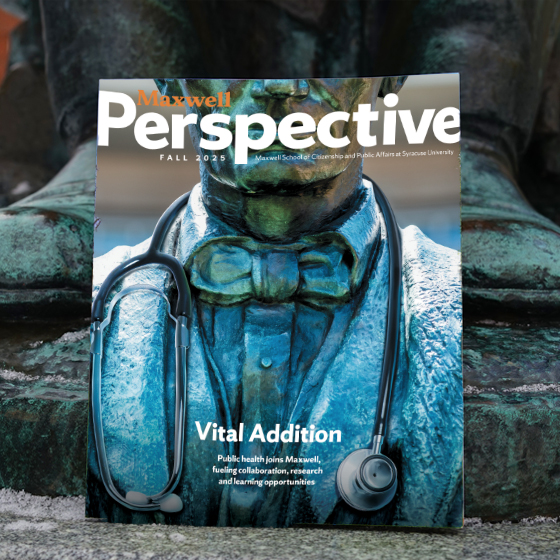
Maxwell Perspective Online
Enjoy Maxwell Perspective magazine your way, both in print and online. Either way, you can expect the same great content accessible anytime:
- News and feature stories about our accomplished and inspiring alumni community.
- Digital Class Notes, regularly updated with the latest from the Maxwell global community.
- Plus, upcoming events and ways to connect.