A Fitting Backdrop: Maxwell Examines America’s 250th in Philadelphia
By Janine White
October 6, 2026
At the Museum of the American Revolution, Syracuse University alumni heard Dean David M. Van Slyke and historian Tessa Murphy reflect on the nation’s founding and the legacy of independence.
The Revolutionary War is often celebrated as a unified bid for self-governance. But rebellion against the British was far from universally embraced.
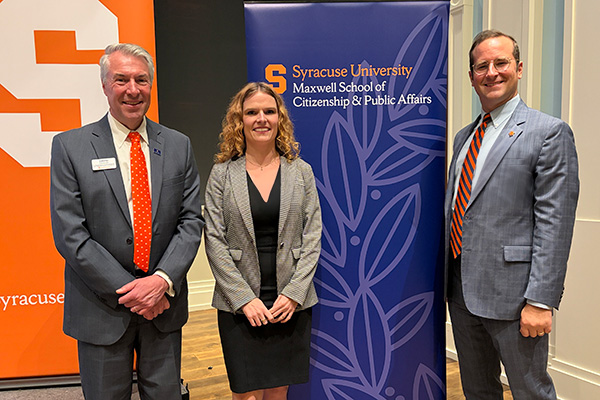
Tensions around independence divided many communities, including the Haudenosaunee Confederacy, according to Maxwell historian Tessa Murphy.
“The Tuscarora and Oneida chose to side with the Patriots, and the rest of the nations were on the side of the British,” Murphy told Syracuse University alumni gathered Sept. 23 at Philadelphia’s Museum of the American Revolution. “This transforms the place where you all went to school into a really contested battleground.”
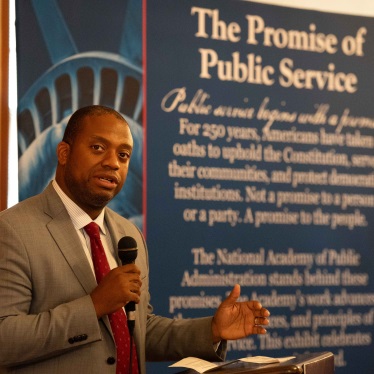
Murphy spoke about these and other complexities of the Revolutionary War as the featured speaker at the event, where over 75 alumni and their guests, including dozens of graduates from the Maxwell School, gathered to explore the nation’s past, present and future.
The event was hosted by Maxwell in partnership with Syracuse University’s Office of Alumni and Constituent Engagement. It was part of Maxwell’s ongoing programming in commemoration of the nation’s 250th anniversary. The museum was a fitting historic setting—two blocks from where the Declaration of Independence was signed.
“USA@250 is inspired by Maxwell’s founding mission of citizenship and public affairs and grounded in a single central question: How has the United States lived up to its founding principles of equality, life, liberty and the pursuit of happiness?” Dean David M. Van Slyke asked the crowd. “This is exactly the kind of question a university and the school ought to be asking.”
In her talk, Murphy shared that British colonies stretched from the Caribbean to what became Canada. Loyalists were a “diverse group of people with differing motivations,” said Murphy, who is the Maxwell Dean Associate Professor of Atlantic History. “I think it’s important not to miss the extent of division within the British colonies in order not to assume that independence was some kind of foregone conclusion.”
Citing research by historian Maya Jasanoff, she noted that “up to 100,000 people would ultimately leave the independent United States in order to remain within the British Empire.”
Murphy’s lecture highlighted how America’s fight for independence was a story of global governance with far-reaching implications. After the British lost the 13 colonies, they went on to rule other colonial subjects with much tighter control. But the war also inspired movements beyond the nascent United States.
We are still learning so much more, both about our history, but then also what it means for our future. This year has reminded us that there are so many voices in this thing we call American history and that just keeps evolving.”
Heidi Ramirez ’96 B.A. (PSt)
In the Q&A that followed her talk, Murphy shared that the Haitian Revolution led to the second independent republic in the Americas.
“Some of the people who fought for Haitian independence were troops in the Battle of Savannah during the American Revolution,” she said. “So there’s a direct line in terms of some of the inheritances of U.S. independence in other parts of the Americas, which I think is something to be proud of.”
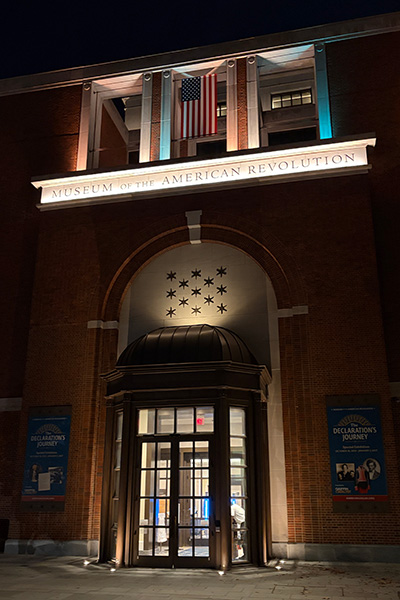
Throughout the evening, attendees also had a chance to browse autographs from U.S. presidents such as George Washington and Abraham Lincoln, from the collection of Matthew Correia ’08 B.S. (Econ). Correia shared the stories behind acquiring the signatures from every U.S. president and vice president, and he told fellow alumni he is the first person to have an autograph by every vice president.
Correia’s signed Washington artifact is a soldier discharge from 1783, the Revolutionary War’s final year, and includes a message from the then-general: “The road to glory in a patriot army and free country is thus open to all.” This, Correia said, alludes to the Revolution’s reach for meritocracy. “They wanted to create a different type of governance, a different type of relationship of the people to the government.”
Murphy’s historical perspective, along with the backdrop of the museum and Correia’s collection, served as reminders that America’s story is a work in progress.
“We are still learning so much more, both about our history, but then also what it means for our future,” said Philadelphia-based education consultant Heidi Ramirez ’96 B.A. (PSt) after Murphy’s presentation. “This year has reminded us that there are so many voices in this thing we call American history and that just keeps evolving.”
That sentiment is captured in Maxwell’s USA@250 lecture series, which features faculty talks on women’s rights, Frederick Douglass, immigration, the U.S. Constitution and more and is available to all on YouTube. The series reflects Maxwell’s mission to bring scholarship on the nation’s founding directly to the public in this semiquincentennial year.
“A milestone like this isn’t just for scholars to study,” Van Slyke said. “It’s a call for all of us who care about the health of American self-government to carry forward.”
Related News
School News
Oct 20, 2026
School News

Oct 9, 2026
School News
Oct 1, 2026
School News
Sep 24, 2026