Colleen Heflin Examines Impact of Changes to Virginia’s Child Care Subsidy Program
January 15, 2026
The Maxwell professor and fellow researchers are supported by the University of Wisconsin and the U.S. Department of Health and Human Services.
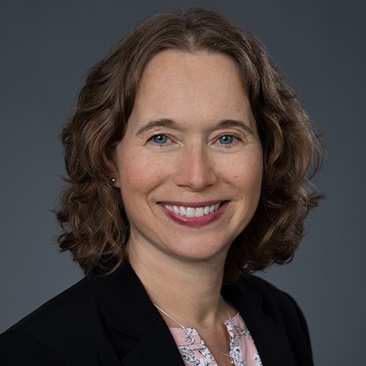
Colleen Heflin, professor of public administration and international affairs, recently embarked on a research endeavor that seeks to determine how changes to Virginia’s childcare subsidy program in 2018 impacted families and employment outcomes.
Heflin is collaborating with Taryn Morrissey, associate dean of research and chair of the Department of Public Administration and Policy at American University’s School of Public Affairs, and Clay Fannin ’24 Ph.D. (PA), a National Poverty Fellow at the University of Wisconsin’s Institute for Research on Poverty.
Using state administrative data, the trio is taking a close look at the impact of two policy changes, enacted in October 2018, to Virginia’s Child Care Subsidy Program which assists families in paying childcare costs for children under age 13 or children with special needs under age 18.
The changes were intended to enable more families to receive benefits and lead to greater income growth. Participants were allowed to continue receiving the subsidy while looking for employment and despite swings in work status or income. The second change added a graduated exit policy to increase earnings somewhat without losing childcare benefits.
Titled “Child Care Subsidy Policy Changes and Parental Employment and Earnings Outcomes,” the research project is funded with a $50,000 grant and support from the Institute for Research on Poverty at the University of Wisconsin and the U.S. Department of Health and Human Services.
“We will use linked administrative data from 2015-22 from the Virginia Department of Social Services and unemployment insurance wage records from the Virginia Longitudinal Data System,” says Heflin. The data system contains information about monthly subsidy participation, childcare costs and more.
Heflin says they will also look at quarterly earnings and basic demographic and household composition information for those who receive subsidies, including through the Supplemental Nutrition Assistance Program (SNAP) and Temporary Assistance to Needy Families (TANF).
At Maxwell, Heflin is a senior research associate in the Center for Policy Research, a research affiliate for the Lerner Center for Public Health Promotion and Population Health and the Center for Aging and Policy Studies as well as the Aging Studies Institute. She is regarded as a national expert on food insecurity, nutrition and welfare policy. Her work has been published in numerous journals and she is co-author of “Food for Thought: Understanding Older Adult Food Insecurity” (Russell Sage Foundation, 2025).
Her former student, Fannin, is an institute fellow through 2026. At Maxwell, he specialized in social policy and public finance and collaborated with Heflin and other faculty members on research related to the impacts of COVID-19 era changes to SNAP participation outcomes. His dissertation, which expanded on that work, was supported with a $25,000 grant from Tufts University.
By Jessica Youngman
Related News
School News

Oct 9, 2026
Research

Oct 8, 2026
Research

Oct 6, 2026