In Memoriam: Deborah Pellow
July 22, 2025
‘Fierce anthropologist,’ loyal friend
Deborah Pellow once had students in her Anthropology and Physical Design course conduct an ethnographic study of Maxwell and Eggers halls. Interviews with dozens of faculty, staff and peers unearthed an informative view of how the Maxwell School community talked and felt about their home at Syracuse University.
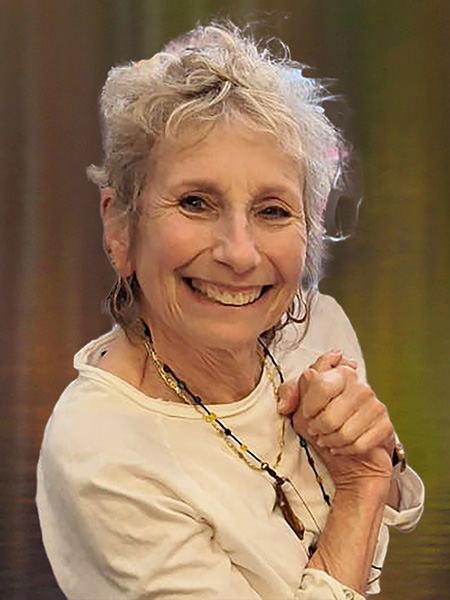
“It was clear that the students involved came to understand that walls mean something culturally, hold stories, and need an anthropological perspective to decode them,” said Anne Mosher, associate professor of geography and the environment and Pellow’s longtime friend. “And she impressed upon them that this was a skill set we should all develop. She absolutely believed that even the most mundane locations that some anthropologists call non-places should totally and completely be considered places.”
Pellow’s favorite example, Mosher added, was airports. “She would say, ‘Watch ‘The Terminal’ movie and think about it.’”
Pellow, a professor of anthropology who worked at the Maxwell School for more than 40 years, passed away on May 29, 2025. She was 80 and is predeceased by her first two spouses and a fiancé, who passed shortly before they were to marry in 2021. She is survived by many beloved cousins throughout the U.S. and Israel.
“Deborah was a fierce anthropologist, an Africanist, a founding voice in urban anthropology. But more than that, she was a great friend. A sparring partner. A co-conspirator. An intellectual instigator,” said Mosher, who is currently in Spain on a research endeavor that Pellow encouraged.
Born in Los Angeles, Pellow moved to New York City and then Philadelphia as a child. She earned a Ph.D. from Northwestern University, and her fieldwork took her to Ghana, Nigeria, Japan and China. Her fifth and most recent book, Living Afar, Longing for Home: The Role of Place in the Creation of the Dagomba New Elite, examines spatialized transitions in status and wealth.
While Pellow received many awards for her scholarship—including the William Wasserstrom Prize for Graduate Teaching—her friends said her most cherished honor was a citation from the neighborhood where she did much of her fieldwork in Ghana, naming her an "Ambassador of Greater Accra Zongo Chief to the United States of America."
Pellow was involved in many facets of the Syracuse community. On campus, she was a founding director of the Space and Place Initiative at Maxwell's Global Affairs Institute, the precursor to the Moynihan Institute for Global Affairs. She was also active in the University Senate, chaired the Senate Library Committee and a Chancellor Search Committee, and taught for many years in the interdisciplinary Master of Social Science Professional Program. She was also an early director of the Women and Gender Studies Program. Off campus, she served on the board of The Friends of Chamber Music and Francis House, a home for the dying where she was a pet support volunteer.
Douglas Armstrong, professor emeritus of anthropology, said Pellow emailed him shortly before her passing, to share her enthusiasm following a visit to the Harriet Tubman Home and Seward House—subjects of his study and preservation efforts for more than a decade. “A scholar interested in ‘space and place’ she was happily excited by her experiences that day,” he said.
“Deborah was a character who would often step beyond the norms and boundaries of social exchange, but she was always a loyal friend,” added Armstrong, who remembers fondly the times she and her partner joined him for black-tie dinners for the county historical association’s board of directors. “She loved the interplay of people and space and was fascinated by the built environment. It was great fun, happy evenings, getting dressed up and watching Deborah watching people in beautiful spaces.”
Relationships were a focus of her anthropological work and central to her personal life. Her loved ones described her as fiercely loyal, boisterous, warm and funny, and said she was an excellent conversationalist.
“She also was a tremendous gossip in the positive way that anthropologists understand. Communities—to be vibrant—have to have at least one skilled gossip, and Deborah was that person,” said Mosher. “She was the glue that held us together through good times and bad. She knew exactly what to hold onto and what to share.”
JoAnn Rhoades worked with Pellow for nearly seven years as an administrative specialist for the Anthropology department. “We had long conversations on everything from our latest traveling adventure to the news or whatever was on our minds,” said Rhoades. “They were thoughtful, funny and often beautifully unpredictable.”
Rhoades marveled at Pellow’s advocacy and compassion. For instance, she thought nothing of opening her home to international students and faculty members who did not have the means to return home for holidays and breaks. She was a sought-after advisor, and for good reason, said Rhoades.
“Deborah’s advisees not only looked up to her but adored her,” she said. “She didn’t just work with them; she gave them her intelligence or whatever else they needed to succeed as an anthropologist.”
Pellow had many interests, including travel, reading, plants, animals, knitting, the arts and social causes. She brought smiles to Maxwell and beyond during impromptu visits with her beloved dogs, Brodie, and more recently, Morrie. She belonged to a book club, and she recently took up bridge “to stay sharp.”
Armstrong cherishes his last interactions with Pellow. She visited him in California, where he now resides, and he shared a meal with her during a return trip to Syracuse this past spring. “We were—she was—the loudest party in the restaurant,” he said. “She was candid and full of spice, without a filter. In other words, it was just like old times with Deborah.”
Just before Mosher was to depart for Spain, Pellow stopped by her home to wish her bon voyage.
“This was the ‘big adventure’ she encouraged me to have,” she said. “I was scared, but she kept saying, ‘You can do it!’ She wanted this for me. And I wanted to share it all with her—how beautiful it is, how great the students are. There is no staying in to grieve. She would want me out there—writing field notes, asking questions, pushing boundaries, showing up.”
By Jessica Youngman
Published in the Fall 2025 issue of the Maxwell Perspective