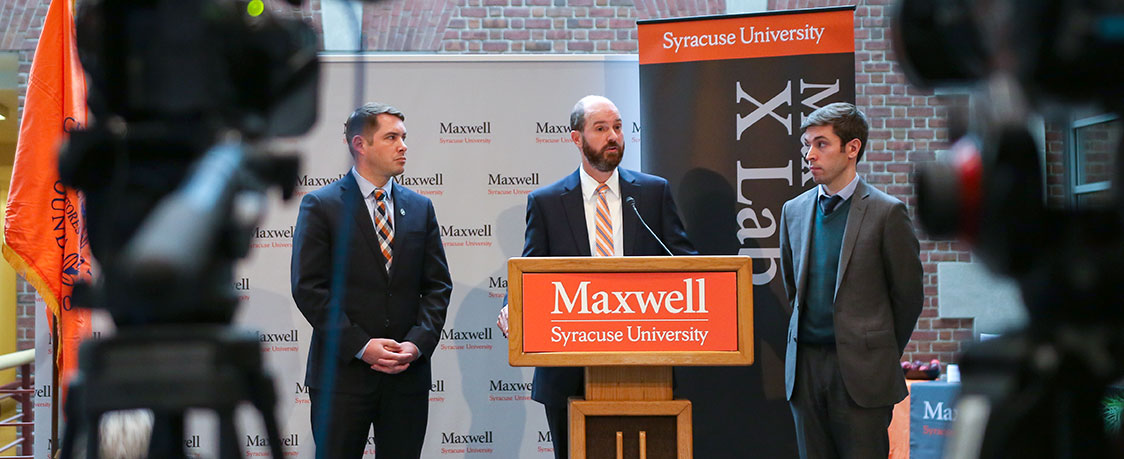
Maxwell X Lab, City of Syracuse collab improves tax collection process
November 13, 2018
Maxwell X Lab, part of the Center for Policy Research at Syracuse University’s Maxwell School of Citizenship and Public Affairs, recently completed a series of projects designed to reduce overdue property tax bills in the City of Syracuse. Delinquent tax bills can lead to costly late fees, interest, liens and — ultimately — foreclosure, creating instability for homeowning families, neighborhoods and city services.
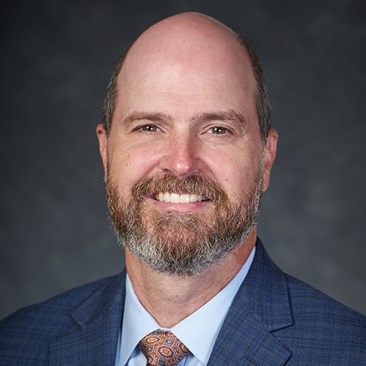
So far, the initiative has helped the City to recoup more than $1.4 million in overdue property taxes, and hundreds of additional properties were prompted to get current on their bills, preventing more costly and troublesome outcomes for both the owner and the City alike. Furthermore, the project has established a costless change to city tax collection processes that has the potential to produce benefits for years to come.
“Tax delinquency that can lead to home foreclosure creates a bleaker outlook for everyone involved — resident families, the neighborhood, and the City,” says Professor Leonard Lopoo, director of the Center for Policy Research, co-founder of X Lab, and an expert on child and family policy. “For example, we know from the research literature that having a stable home and neighborhood is incredibly important for child development, particularly among low-income children. Frequent moves that might include new home environments and different schools make learning more difficult.”
Time and again, we find that the most innovative ideas and comprehensive solutions arise when we bring together people representing different identities, backgrounds and experiences. In a complex, collaborative environment like the Maxwell School, diversity not only enriches us but also is essential for achieving our highest ambitions.
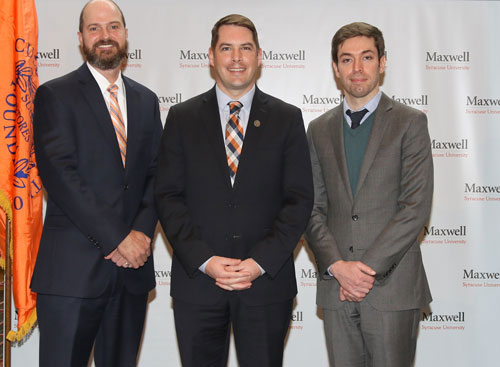
So far, the initiative has helped the City to recoup more than $1.4 million in overdue property taxes, and hundreds of additional properties were prompted to get current on their bills, preventing more costly and troublesome outcomes for both the owner and the City alike. Furthermore, the project has established a costless change to city tax collection processes that has the potential to produce benefits for years to come.
“Tax delinquency that can lead to home foreclosure creates a bleaker outlook for everyone involved — resident families, the neighborhood, and the City,” says Professor Leonard Lopoo, director of the Center for Policy Research, co-founder of X Lab, and an expert on child and family policy. “For example, we know from the research literature that having a stable home and neighborhood is incredibly important for child development, particularly among low-income children. Frequent moves that might include new home environments and different schools make learning more difficult.”
Time and again, we find that the most innovative ideas and comprehensive solutions arise when we bring together people representing different identities, backgrounds and experiences. In a complex, collaborative environment like the Maxwell School, diversity not only enriches us but also is essential for achieving our highest ambitions.
“It should be clear in a few seconds what someone’s asking you to do; otherwise, you’re going to give up.”
Joseph Boskovski '14 MPA
X Lab co-founder and managing director of the redesigned notifications.
The team then conducted randomized controlled trials to evaluate the different messages and communications techniques to determine whether — and which — messages did a better job of improving outcomes. In total, courtesy letters were sent to 3,844 owners who were either delinquent on tax bills before 2017-18 and/or late on their current tax bills. An additional 1,922 owners were in the control group and were not sent courtesy letters in order to allow the researchers to compare outcomes.
“Too often, we find that governments and agencies design systems based on the way they think people will respond. We partner with public institutions and nonprofit organizations to test and build evidence for policies and programs based on the way they actually respond — and this improves outcomes for both sides,” says Boskovski. “For example, we know that some people do not respond to government communications because they are not receiving the message — it may be lost among the ‘junk’ mail — or it is too difficult to comply with the process.”
“Tax delinquency that can lead to home foreclosure creates a bleaker outlook for everyone involved — resident families, the neighborhood, and the City,” says Professor Leonard Lopoo, director of the Center for Policy Research, co-founder of X Lab, and an expert on child and family policy. “For example, we know from the research literature that having a stable home and neighborhood is incredibly important for child development, particularly among low-income children. Frequent moves that might include new home environments and different schools make learning more difficult.”
Time and again, we find that the most innovative ideas and comprehensive solutions arise when we bring together people representing different identities, backgrounds and experiences. In a complex, collaborative environment like the Maxwell School, diversity not only enriches us but also is essential for achieving our highest ambitions.
About the Maxwell School (@MaxwellSU)
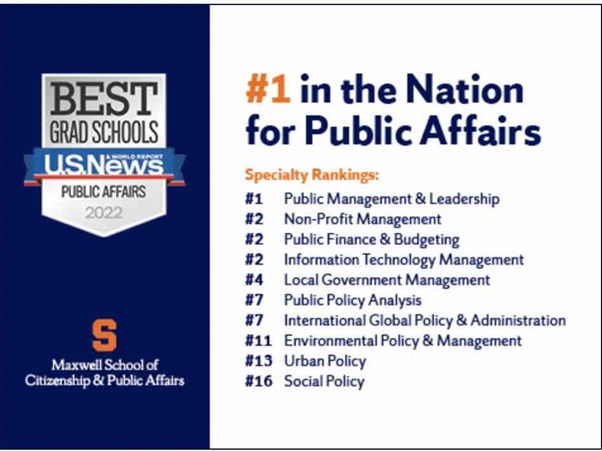
The Maxwell School of Citizenship and Public Affairs at Syracuse University is the number one school of public affairs, according to U.S. News and World Report and offers highly regarded professional programs in public administration and international affairs, as well as undergraduate and graduate degrees across the social sciences. With its main campus in Syracuse, New York, a center in Washington, D.C., and academic partnerships around the globe, the Maxwell network of more than 40,000 alumni in 160 countries provides access to a world of opportunity.
Related News
Media Coverage

Oct 7, 2026
Media Coverage
Sep 15, 2026
Media Coverage
Sep 2, 2026
Research
Aug 31, 2026