Professors of Practice Bring Real-World Learning Into the Classroom
By Diane Stirling
August 14, 2026
Syracuse University Today
Career experience and continuing industry connections make these faculty key to experiential inquiry at Syracuse University.
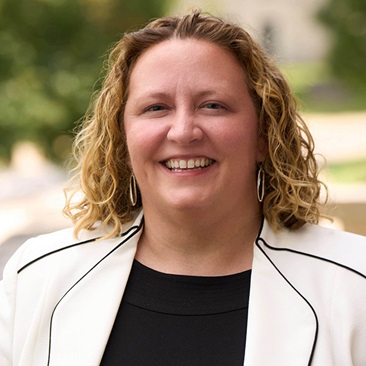
At Syracuse University, some of the most valuable classroom instruction is based not on a textbook but on decades spent solving real problems in the field. Professors of practice bring that kind of expertise directly to students, translating professional experience into lessons that go beyond theory. Nearly 100 professors of practice across the University represent one of the most direct ways Syracuse connects academic learning to the industry.
That connection is central to experiential inquiry, one of the areas of distinctive excellence outlined in the academic strategic plan, “Leading With Distinction.” Where traditional coursework builds foundational knowledge, professors of practice show students how that knowledge is applied in real settings. Their presence ensures Syracuse’s academic programs stay current with an evolving professional landscape, giving students a clearer view of the careers they’re preparing to enter.
We sat down with three professors of practice to hear more about their approach: James (Jamie) Crill, professor of practice in forensic science in the College of Arts and Sciences; Elizabeth (Liz) Arnold, Cramer Family Professor of Practice in Community Impact in the Maxwell School of Citizenship and Public Affairs; and Michael Fudge G’06, G’26, professor of practice in the School of Information Studies.
Q: How do you keep pace with the field?
Arnold: I’m an elected Village of Homer trustee, a SUNY Cortland College Council member and a leader in a women and children’s advocacy organization. That mix and my background with big tech and startups give me a live, ground-level view of how different layers of government and different types of organizations intersect to work on problems. I bring that cross-sector lens directly to students.
Crill: I’m working on real problems both in my research lab and through federally funded programs. What I teach isn’t a snapshot from years ago; it tracks with where the field is today. I use current field data in labs and lectures so students work with and interpret results generated right now.
Fudge: I stay connected through my company, AppHammer, which helps organizations leverage artificial intelligence in their processes and operations. The AI experience I bring to class comes from building one of AppHammer’s products, Artifact Engine, and its AI-forward rethinking of web content management. I’m offering these lessons this fall in a new course, Building Software with Agentic AI.
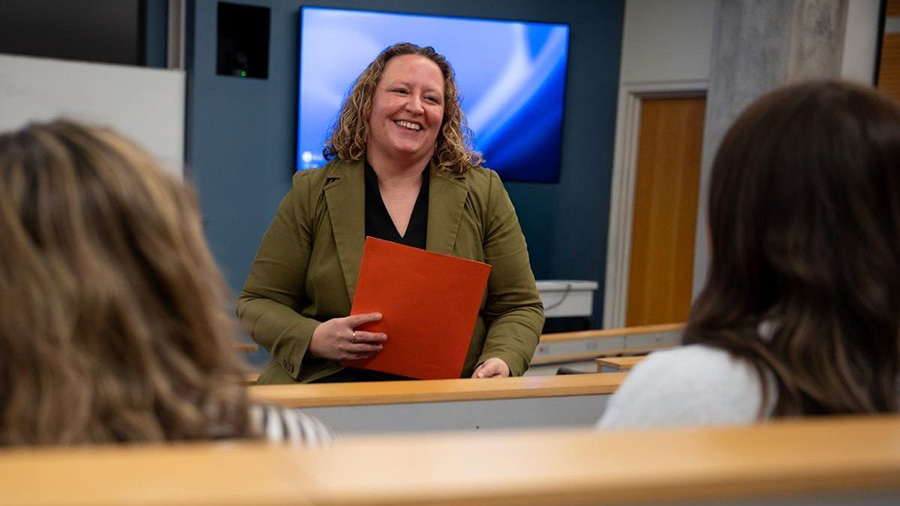
Q: What does a hands-on lesson look like for your students?
Arnold: I mix real-time decision review with research and case studies. In one course, students get 15 minutes to review a real local proposed policy, form a position, and vote, the same time-pressured call I face as a trustee. I push students to turn research into action with a tech/startup framework: ideate, test, launch. A misstep here affects a real community, so engagement and accountability are balanced with experimentation.
Crill: I bring the same instruments and workflows I use in my own research directly into the classroom and lab … those exercises mirror actual practice, not a simplified version. I connect each technique to a casework or operational context—from past work in microbial forensics, biothreat characterization and biosurveillance to my current genomics and biomanufacturing research. The goal is for students to leave having done the thing, not just having read about it.
Fudge: I use a variety of teaching strategies, from flipping content (like having students watch prepared videos then completing an assignment) to a mastery model (where students practice before they’re assessed). This year, I’ll explore AI-assisted feedback to give students near-instant guidance and use AI to support inquiry-based learning.
Related News
School News

Oct 7, 2026
Research
Oct 6, 2026
Research
Oct 1, 2026
Media Coverage
Sep 23, 2026