Featured Research
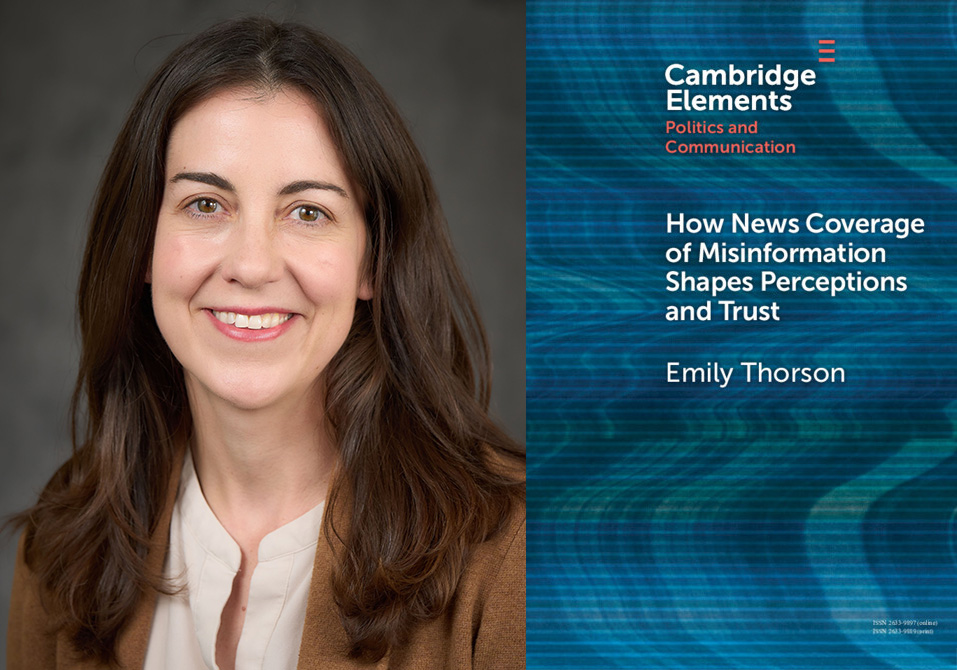
Emily Thorson, associate professor of political science and senior research associate in the Campbell Public Affairs Institute, analyzes how the media addresses the issue of misinformation and how such coverage shapes public perception and trust. It explores the relationship between news and social media, highlighting how mainstream media often places blame on social media for the spread of false information.
Cambridge University Press, 2024
“It's Not the Economy: The Effect of Framing Arguments on Attitudes Toward Refugees”
In this article, Lamis Abdelaaty, associate professor of political science, and her co-authors assess whether and how economic, legal, and moral arguments affect Americans’ support for refugee admissions, and which types of refugees they prefer to admit.
International Migration Review, 2025
“Analyzing the Stability of Gun Violence Patterns During the COVID-19 Pandemic in Syracuse, New York”
Professors Robert A. Rubinstein, Sandra D. Lane and their co-authors investigate whether COVID-19 altered the geospatial patterns of gun violence in Syracuse, New York.
International Journal of Health Geographics, 2025
Democracies in America: Keywords for the Nineteenth Century and Today
Mark Schmeller
Oxford University Press, March 2023
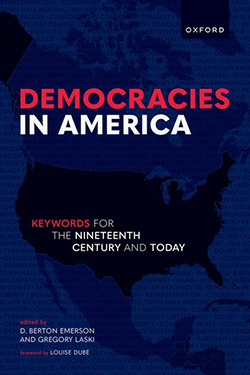
Ask someone their thoughts about "democracy" and you'll get many different responses. Some may presume it a thing once established yet now under threat. Others may believe that democracy has always been compromised by the empowered few. In the contemporary United States, marked by constituencies across the political spectrum believing that their voices have gone unheard, "democracy" gets wielded in so many divergent directions as to be rendered nearly incoherent.
Democracies in America reminds us that this reality is nothing new. Focusing on the various meanings of "democracy" that circulated in the long nineteenth century, the book collects twenty-five essays, each taking up a keyword in the language we use to talk about democracy. Penned by a group of diverse intellectuals, the entries tackle terms both commonplace (citizenship and representation) and paradigm-stretching (disgust and sham). The essays thus consider the relationship between "America" and "democracy" from multiple disciplinary angles and from different moments in a major historical period-amidst the vitality of the revolutionary epoch, in the contentious lead-up to the Civil War, and through the triumphs and failures of Reconstruction and the early reforms of the Progressive Era-while making both forward and backward glances in time.
The book frames its keywords around a series of enduring democratic dilemmas and questions, and provides extensive resources for further study. Ultimately the volume cultivates, for students and teachers in classrooms, as well as citizens in libraries and cafés, a language to deliberate about the possibilities and problems of democracy in America.
Related News
Media Coverage

May 18, 2026
School News
May 14, 2026
Media Coverage

May 14, 2026
Media Coverage
May 13, 2026

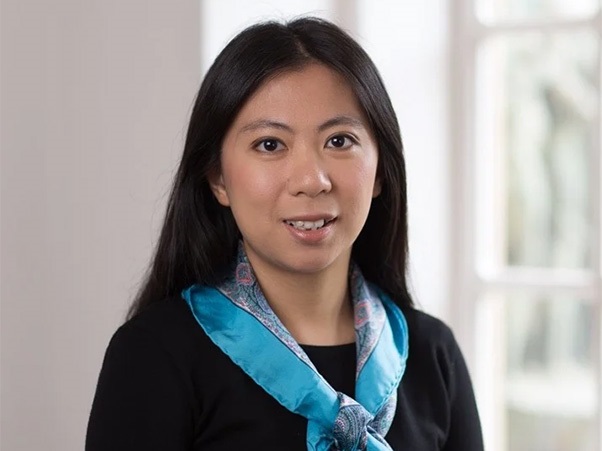
Baobao Zhang has received up to $200K to research the role of citizens in the governance of artificial intelligence systems.
Lecture Series
Campbell's lecture series bring together people with a diverse range of perspectives and interests to open dialogue, foster understanding and give the power of knowledge.
Bantle Symposium on Business and Government Policy
Phanstiel Lecture Series on Leadership
State of Democracy Lecture Series
Tanner Lecture Series on Ethics, Citizenship and Public Responsibility
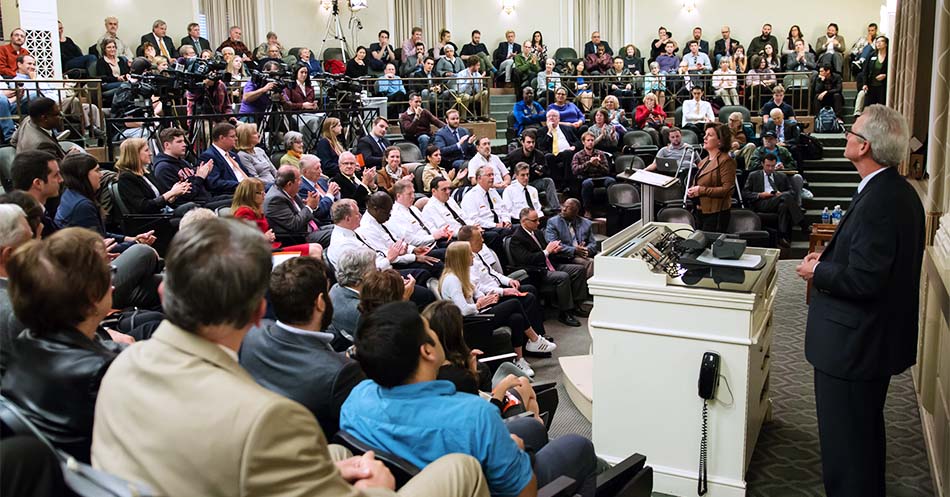
Campbell Conversation Spotlight
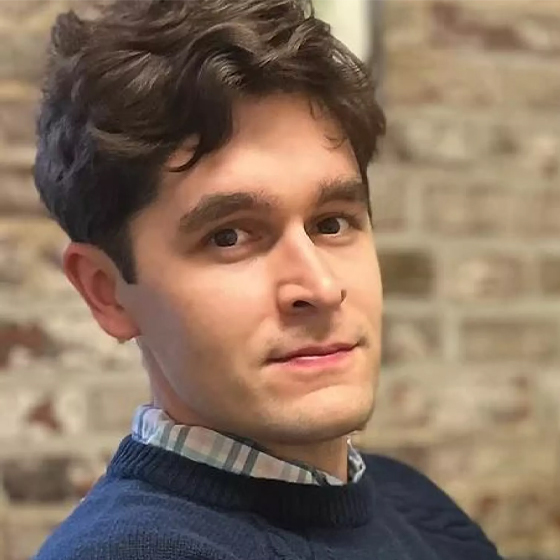
You probably know the name James Garfield, but how much else do you know about him, and why might he and his political times be relevant to considering today’s political landscape? Host Grant Reeher interviews C. W. Goodyear, a historian who has written a new definitive biography of him. His book is titled President Garfield: From Radical to Unifier.
December 9, 2023
Interested in partnering with us?
Democracies in America: Keywords for the Nineteenth Century and Today
Mark Schmeller
Oxford University Press, March 2023
Ask someone their thoughts about "democracy" and you'll get many different responses. Some may presume it a thing once established yet now under threat. Others may believe that democracy has always been compromised by the empowered few. In the contemporary United States, marked by constituencies across the political spectrum believing that their voices have gone unheard, "democracy" gets wielded in so many divergent directions as to be rendered nearly incoherent.
Democracies in America reminds us that this reality is nothing new. Focusing on the various meanings of "democracy" that circulated in the long nineteenth century, the book collects twenty-five essays, each taking up a keyword in the language we use to talk about democracy. Penned by a group of diverse intellectuals, the entries tackle terms both commonplace (citizenship and representation) and paradigm-stretching (disgust and sham). The essays thus consider the relationship between "America" and "democracy" from multiple disciplinary angles and from different moments in a major historical period-amidst the vitality of the revolutionary epoch, in the contentious lead-up to the Civil War, and through the triumphs and failures of Reconstruction and the early reforms of the Progressive Era-while making both forward and backward glances in time.
The book frames its keywords around a series of enduring democratic dilemmas and questions, and provides extensive resources for further study. Ultimately the volume cultivates, for students and teachers in classrooms, as well as citizens in libraries and cafés, a language to deliberate about the possibilities and problems of democracy in America.
Related News
Media Coverage
May 18, 2026
School News
May 14, 2026
Media Coverage
May 14, 2026
Media Coverage
May 13, 2026