Featured Research
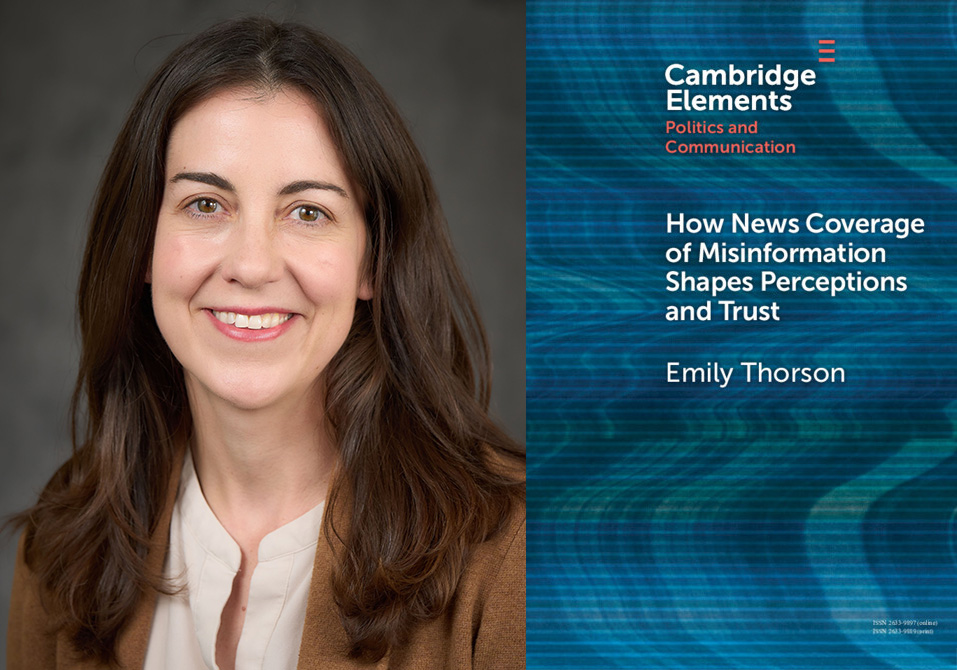
Emily Thorson, associate professor of political science and senior research associate in the Campbell Public Affairs Institute, analyzes how the media addresses the issue of misinformation and how such coverage shapes public perception and trust. It explores the relationship between news and social media, highlighting how mainstream media often places blame on social media for the spread of false information.
Cambridge University Press, 2024
“It's Not the Economy: The Effect of Framing Arguments on Attitudes Toward Refugees”
In this article, Lamis Abdelaaty, associate professor of political science, and her co-authors assess whether and how economic, legal, and moral arguments affect Americans’ support for refugee admissions, and which types of refugees they prefer to admit.
International Migration Review, 2025
“Analyzing the Stability of Gun Violence Patterns During the COVID-19 Pandemic in Syracuse, New York”
Professors Robert A. Rubinstein, Sandra D. Lane and their co-authors investigate whether COVID-19 altered the geospatial patterns of gun violence in Syracuse, New York.
International Journal of Health Geographics, 2025
The Crisis of Belonging: Building Alternative Communities for Care
Jenn M. Jackson, Amber E. Morris
Policy Brief No. 3
June 2024
Overview
In this policy brief, Professor Jackson and Amber Morris, PhD Candidate, examine how marginalized peoples, like Black Americans, Latinx/e/o/a people, immigrants, disabled folx, queer and trans people, previously and currently incarcerated people, poor and working-class people, and many others in the United States often form alternative sites of camaraderie, citizenship, and togetherness to combat the violence and exclusion of mainstream white heteropatriarchal society and the watchful eye of the State. Meanwhile, we put forth, state actors typically deem these actions criminal, deviant, and outside the normative boundaries of citizenship. We argue that these spaces are critical sites of political revolution, identity formation, and general fellowship that are often denied in other contexts. Further, if the State expanded human rights and dignities for all social groups equally, the prevalence of alternative groups for belonging might reflect reduced violence, crime, and in-group competition.

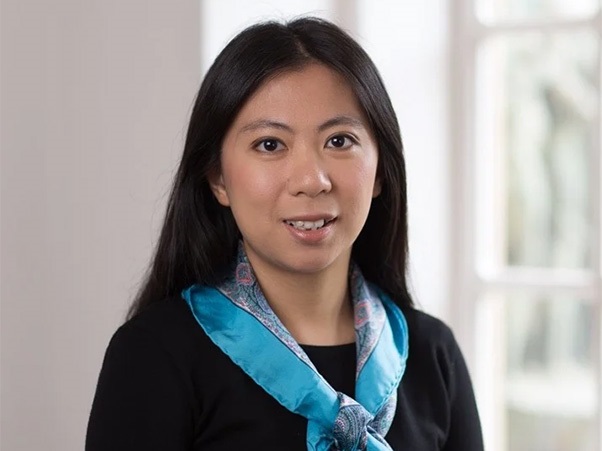
Baobao Zhang has received up to $200K to research the role of citizens in the governance of artificial intelligence systems.
Lecture Series
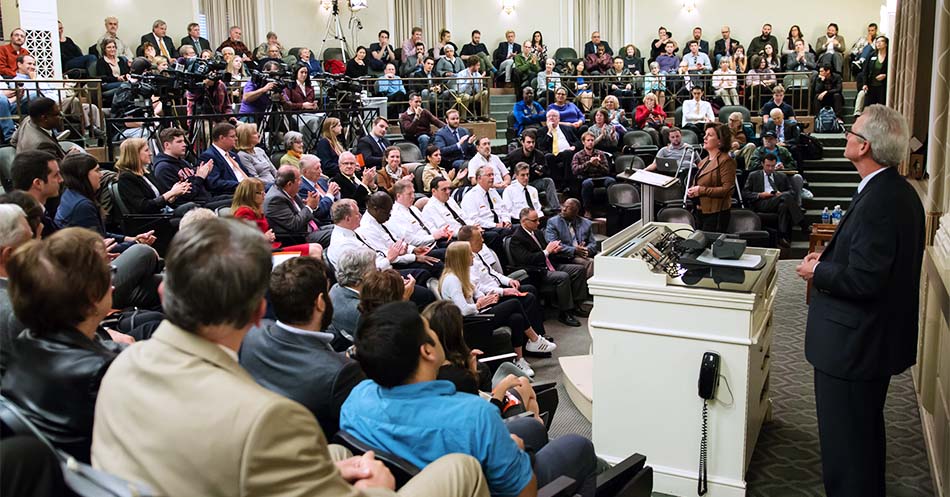
Campbell's lecture series bring together people with a diverse range of perspectives and interests to open dialogue, foster understanding and give the power of knowledge.
Bantle Symposium on Business and Government Policy
Phanstiel Lecture Series on Leadership
State of Democracy Lecture Series
Tanner Lecture Series on Ethics, Citizenship and Public Responsibility
Campbell Conversation Spotlight
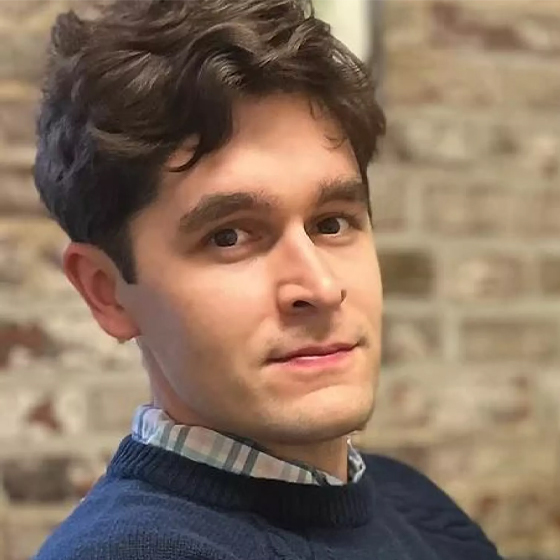
You probably know the name James Garfield, but how much else do you know about him, and why might he and his political times be relevant to considering today’s political landscape? Host Grant Reeher interviews C. W. Goodyear, a historian who has written a new definitive biography of him. His book is titled President Garfield: From Radical to Unifier.
December 9, 2023
Interested in partnering with us?
The Crisis of Belonging: Building Alternative Communities for Care
Jenn M. Jackson, Amber E. Morris
Policy Brief No. 3
June 2024
Overview
In this policy brief, Professor Jackson and Amber Morris, PhD Candidate, examine how marginalized peoples, like Black Americans, Latinx/e/o/a people, immigrants, disabled folx, queer and trans people, previously and currently incarcerated people, poor and working-class people, and many others in the United States often form alternative sites of camaraderie, citizenship, and togetherness to combat the violence and exclusion of mainstream white heteropatriarchal society and the watchful eye of the State. Meanwhile, we put forth, state actors typically deem these actions criminal, deviant, and outside the normative boundaries of citizenship. We argue that these spaces are critical sites of political revolution, identity formation, and general fellowship that are often denied in other contexts. Further, if the State expanded human rights and dignities for all social groups equally, the prevalence of alternative groups for belonging might reflect reduced violence, crime, and in-group competition.