Maxwell Experts Weigh a Year of Tariff Turbulence
By Jessica Youngman
April 27, 2026
Hosted by the Moynihan Institute, the cross-disciplinary panel discussed the impact on consumers, supply chains, global credibility and more.

One year after President Donald Trump announced the largest single-day tariff increase in at least seven decades, several Maxwell School faculty members gathered for a wide-ranging conversation that covered consumer prices, supply chain disruption, U.S. global credibility and the future of American trade policy.
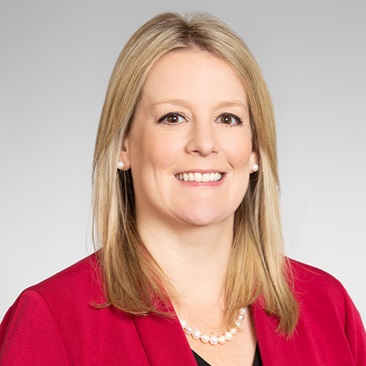
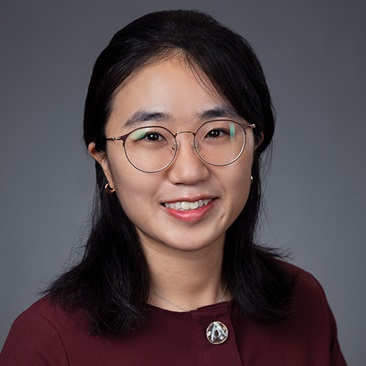
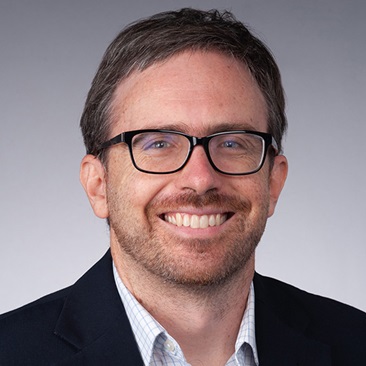
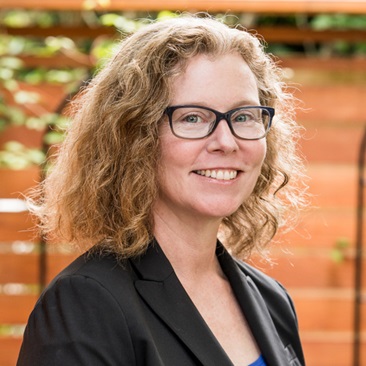
Hosted by the Moynihan Institute of Global Affairs’ Trade, Development and Political Economy (TDPE) program, the discussion was moderated by Kristen Patel, the Donald P. and Margaret Curry Gregg Professor of Practice in Korean and East Asian Affairs. Panelists were Minju Kim, assistant professor of political science; Devashish Mitra, professor of economics and Gerald B. and Daphna Cramer Professor of Global Affairs; and Ryan Monarch, associate professor of economics and director of the TDPE program.
A central theme of the April 14 event was the deceptively simple question of who bears the cost of a tariff. Monarch addressed the public confusion directly: if a retailer imports a television from China subject to a 50% tariff, that company pays 50% of the product’s value to the U.S. government. What matters economically, he argued, is what happens next.
Panelists said research on the first Trump-era trade war showed that the effects on consumer prices were “surprisingly small”—companies absorbed much of the tariff cost rather than passing it fully to shoppers, and foreign exporters did not significantly lower their prices to compensate. Some consumers have sued retailers arguing they were overcharged, but Monarch was skeptical those cases would succeed. “Every company has a different strategy for how they try to smooth out cost increases to their customers,” he said. “These things take a lot of time.”
Kim shared findings from her ongoing research into tariff exclusion requests—the process by which firms petition to be exempted from specific tariffs. She finds that firms that lobby for an exclusion are more likely to receive one than those that don’t. Perhaps more striking: high bureaucratic turnover makes lobbying even more effective. When agencies experience rapid staff churn, they tend to rely more heavily on information provided by outside firms, amplifying the influence of well-organized private interests, she said. The finding is particularly relevant now, she noted, given the current administration’s reduction of job protections for federal workers.
An audience question about the long-term trajectory of U.S. trade policy drew some of the panel’s most candid responses. Mitra referred to historical cycles, arguing that if current tariffs inflict enough economic damage, political pressure will eventually push countries back toward liberalization—as it did after the 1930s. “If the data we see today hurts the U.S. economy and the world economy, we will see countries trying to go back to freer trade,” he said.
Monarch agreed that was possible but noted a harder shift underway: trade policy has become a geopolitical instrument first, with economic justification an afterthought. “That makes me sad as an economist,” he said, “but tariffs are going to be right there alongside other policy tools” in ways they weren’t before the current administration.
Patel offered a ground-level illustration of the moment’s unusual public reach. Shortly after the April 2025 announcement, a man at her dry cleaner asked her to explain what a tariff was. “I think one of the outcomes of all this is an education process for a lot of the U.S. population that perhaps we underestimated,” she said.
Monarch closed with a pointed argument, sharing his view that the biggest obstacle to a productive national debate is that the administration continues to make economic arguments for policies the evidence doesn’t support. “The key tension is that the administration is not being honest about the economic effects,” he said. Rather than debating whether tariffs raise prices, he argued, the country would be better served by an honest acknowledgment that they do, and a straightforward debate about whether the political goals are worth the cost.
The TDPE program is housed within the Moynihan Institute of Global Affairs. For information on future events, contact George Tsaoussis Carter at gtsaouss@syr.edu.
Related News
School News

Oct 9, 2026
Research

Oct 8, 2026
School News

Oct 7, 2026